

















































Embroidery vs. Printing: Which Is Best for Custom Apparel?
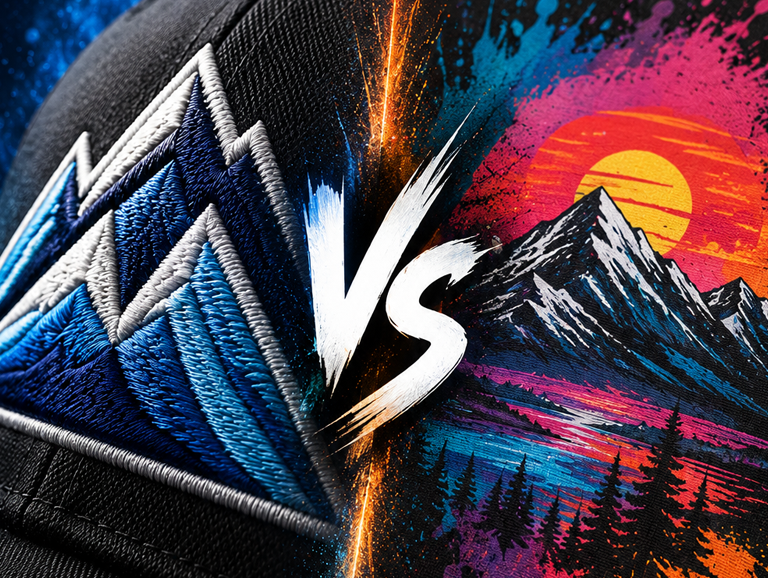
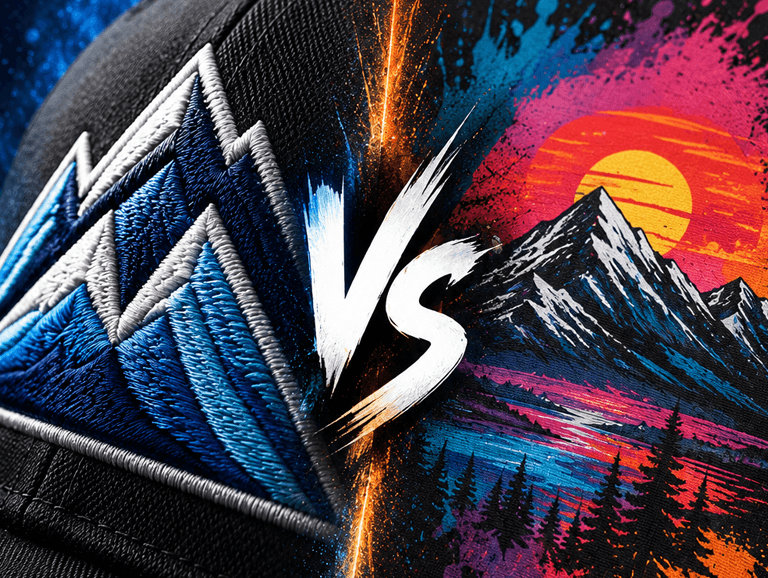
Choosing between embroidery vs. printing is an important decision when ordering custom apparel. The right decoration method depends on your logo, artwork, garment, quantity, design details, and the finished look you want.
Embroidery is a popular choice for professional logos on polos, hats, jackets, uniforms, and workwear. Printing is often better for detailed artwork, small text, phone numbers, gradients, fades, shadows, and larger graphics.
Not sure which option is right for your project? Contact DecorateONE to have your artwork reviewed and find the best decoration method for your custom apparel.
Embroidery vs. Printing: What Is the Difference?
The biggest difference between embroidery and printing is how the design is applied to the garment.
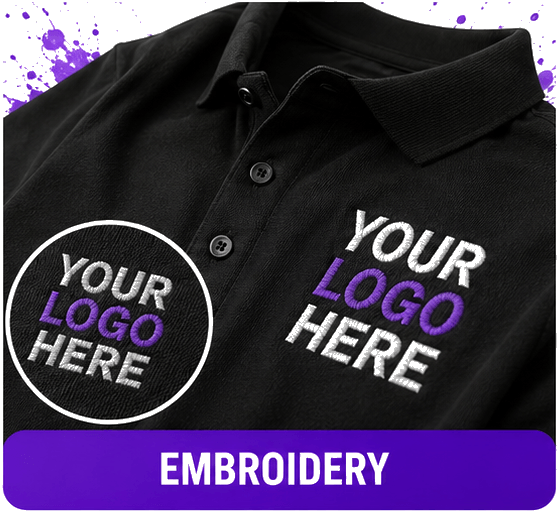
Embroidery uses thread that is sewn directly into the apparel. This creates a raised, textured finish that works especially well for clean logos, uniforms, corporate apparel, and professional branding.
Printing applies ink or a printed transfer to the garment. Depending on the printing method, it can reproduce significantly more artwork detail, including small lettering, photographs, gradients, fades, shadows, and complex graphics.
Understanding the difference between embroidery and printing makes it easier to choose the decoration method that will produce the best result for your logo and apparel.
When Is Embroidery the Best Choice?
Embroidery is one of the most popular choices for businesses that want a professional, durable appearance. It works particularly well on polos, hats, jackets, uniforms, work shirts, and heavier garments.
A simple logo with bold lettering and solid colors can look excellent when embroidered. The raised thread gives the design a premium appearance while creating a professional look for employees and company branding.
Choose Embroidery for Custom Apparel When You Have:
- ● Simple company logos
- ● Solid-color artwork
- ● Polo shirts and uniforms
- ● Hats and jackets
- ● Corporate and professional apparel
- ● Designs that benefit from a raised, textured finish
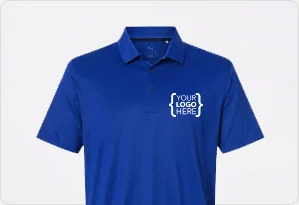
For a typical left-chest logo, approximately 3.5 to 4 inches wide is common. However, size is only one consideration. The amount of detail in your logo can determine whether embroidery is the right choice.
What Are the Limitations of Embroidery?
While embroidery provides a professional appearance, thread cannot reproduce every detail found in a digital logo.
Very small lettering, thin lines, gradients, fades, shadows, and other fine details can be difficult to reproduce clearly with embroidery.
For example, a company logo may look perfect on a computer screen with a phone number underneath. Once the logo is reduced to a typical left-chest size, the phone number may become too small to embroider clearly.
In that situation, printing may provide a cleaner and more readable result.
Can You Embroider Gradients and Fades?
Not in the same way as printing.
Embroidery uses individual thread colors rather than continuously blending colors. A gradient or fade generally needs to be converted into available thread colors, which can change the appearance of the original artwork.
If your logo relies heavily on color transitions, gradients, or photographic effects, printing is usually the better option.
Can You Embroider Shadows and 3D Effects?
Soft shadows, glows, realistic shading, and other dimensional effects can be difficult to reproduce with thread.
If these effects are an important part of your logo, a printed decoration method will generally provide a more accurate representation of the original artwork.
When Is Printing the Best Choice?
Printing gives you more flexibility when working with detailed or complex artwork. Depending on the printing process, you can reproduce small text, phone numbers, multiple colors, gradients, fades, shadows, and intricate graphics.
Printing is commonly used for T-shirts, sweatshirts, hoodies, team apparel, event shirts, uniforms, company apparel, and large front or back designs.
Choose Printing for Custom Apparel When You Need:
- ● Small text and phone numbers
- ● Gradients and fades
- ● Shadows and dimensional effects
- ● Fine lines and intricate artwork
- ● Large front and back designs
- ● Full-color artwork
- ● Designs that need to closely match digital artwork
Screen Printing vs. DTF Printing
When comparing embroidery vs. printing, it is important to understand that printing includes multiple decoration methods. Two popular options are screen printing and DTF printing.
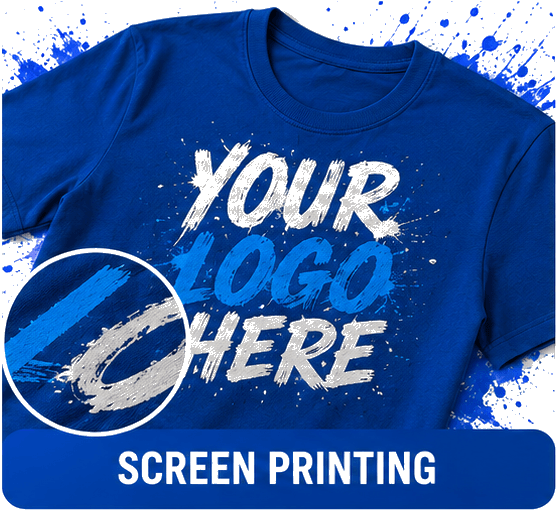
Screen printing is an excellent choice for bold graphics and larger apparel orders. It is commonly used for T-shirts, sweatshirts, team apparel, company shirts, event shirts, and other high-volume projects.
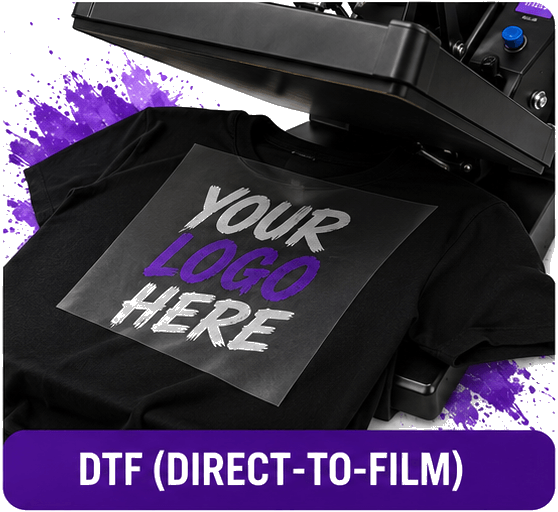
DTF (Direct-to-Film) printing is especially useful for detailed, full-color artwork. DTF printing can reproduce gradients, fades, shadows, small details, and complex graphics while providing flexibility for different order quantities.
The best printing method depends on your artwork, garment, quantity, and desired finished appearance.
Screen Printing Is Often Best For:
- ● Bold graphics
- ● T-shirts and sweatshirts
- ● Large designs
- ● Higher-volume orders
- ● Company and event apparel
DTF Printing Is Often Best For:
- ● Full-color designs
- ● Gradients and fades
- ● Small details
- ● Complex graphics
- ● Smaller apparel orders
- ● Designs with multiple colors

Embroidery vs. Printing: Which Should You Choose?
There is no single decoration method that is best for every custom apparel project. The right choice depends on your artwork, garment, order quantity, and desired appearance.
| Embroidery | Printing |
|---|---|
| Simple, solid-color logos | Detailed and complex graphics |
| Polos and uniforms | T-shirts and sweatshirts |
| Hats and jackets | Large front or back designs |
| Professional corporate look | Small text and phone numbers |
| Raised, textured appearance | Gradients, fades, and shadows |
Can the Same Logo Be Used for Embroidery and Printing?
Yes. Many businesses use different versions of the same logo for embroidery and printing.
An embroidery version may need to simplify small details, remove gradients, or adjust tiny lettering so the design can be reproduced clearly with thread.
A printed version can usually retain more of the original artwork, including fine details, gradients, fades, shadows, and other effects.
This does not mean you are changing your brand. You are simply optimizing your artwork for the decoration method.
How to Choose Between Embroidery and Printing
When deciding between embroidery vs. printing, consider these five important factors:
- ● Artwork: Is your logo simple or highly detailed?
- ● Text: Does your design contain small lettering or a phone number?
- ● Garment: Are you decorating a polo, hat, jacket, T-shirt, sweatshirt, hoodie, or uniform?
- ● Quantity: How many garments do you need?
- ● Appearance: Do you want a raised embroidered finish or a printed graphic?
Let Your Artwork Choose the Decoration Method
The best way to decide between embroidery vs. printing is to look at the actual artwork and the garment you plan to decorate.
If you have a simple company logo for a polo, hat, jacket, or uniform, embroidery may be the ideal choice. If your design contains small text, phone numbers, gradients, fades, shadows, or complex artwork, printing will often provide a cleaner and more accurate result.
At DecorateONE, we offer custom embroidery, screen printing, and DTF printing to help businesses choose the right decoration method for their apparel.
Need Help Choosing Embroidery or Printing?
Not sure which decoration method is right for your logo? Contact DecorateONE and send us your artwork. Our team can review your design and help determine whether embroidery, screen printing, or DTF printing will produce the best result.
For additional answers about embroidery, printing, pricing, artwork, and custom apparel, visit our FAQs.
Quick Takeaway: Embroidery vs. Printing
Embroidery: Best for simple, professional logos on polos, hats, jackets, uniforms, and other garments where a raised, textured appearance is desired.
Screen Printing: Best for bold graphics, T-shirts, sweatshirts, large designs, and higher-volume apparel orders.
DTF Printing: Best for detailed, full-color artwork with gradients, fades, shadows, fine details, and complex graphics.
When comparing embroidery vs. printing, choose the method that best matches your artwork, garment, quantity, and desired finished appearance.
Custom Embroidery, Screen Printing & DTF Printing
DecorateONE provides custom apparel decoration for businesses, organizations, teams, events, and brands. Whether you need embroidered polos and hats or printed T-shirts and sweatshirts, our team can help you choose the right decoration method for your project.