











































Screen Printing vs. DTF Printing: Which Is Right for You?
Screen printing and DTF (Direct-to-Film) printing are two of the most popular ways to decorate custom apparel, but they aren’t interchangeable. Each method has a different process, a different price structure, and a different sweet spot depending on your artwork and order size. Here’s how screen printing vs. DTF printing compare, so you can choose the right one for your next order.
What Is Screen Printing?
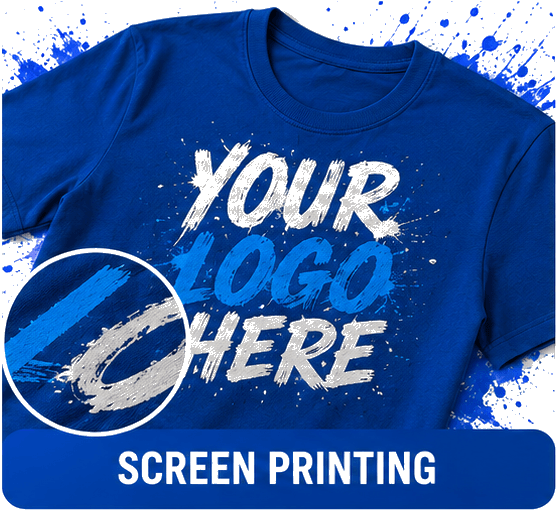
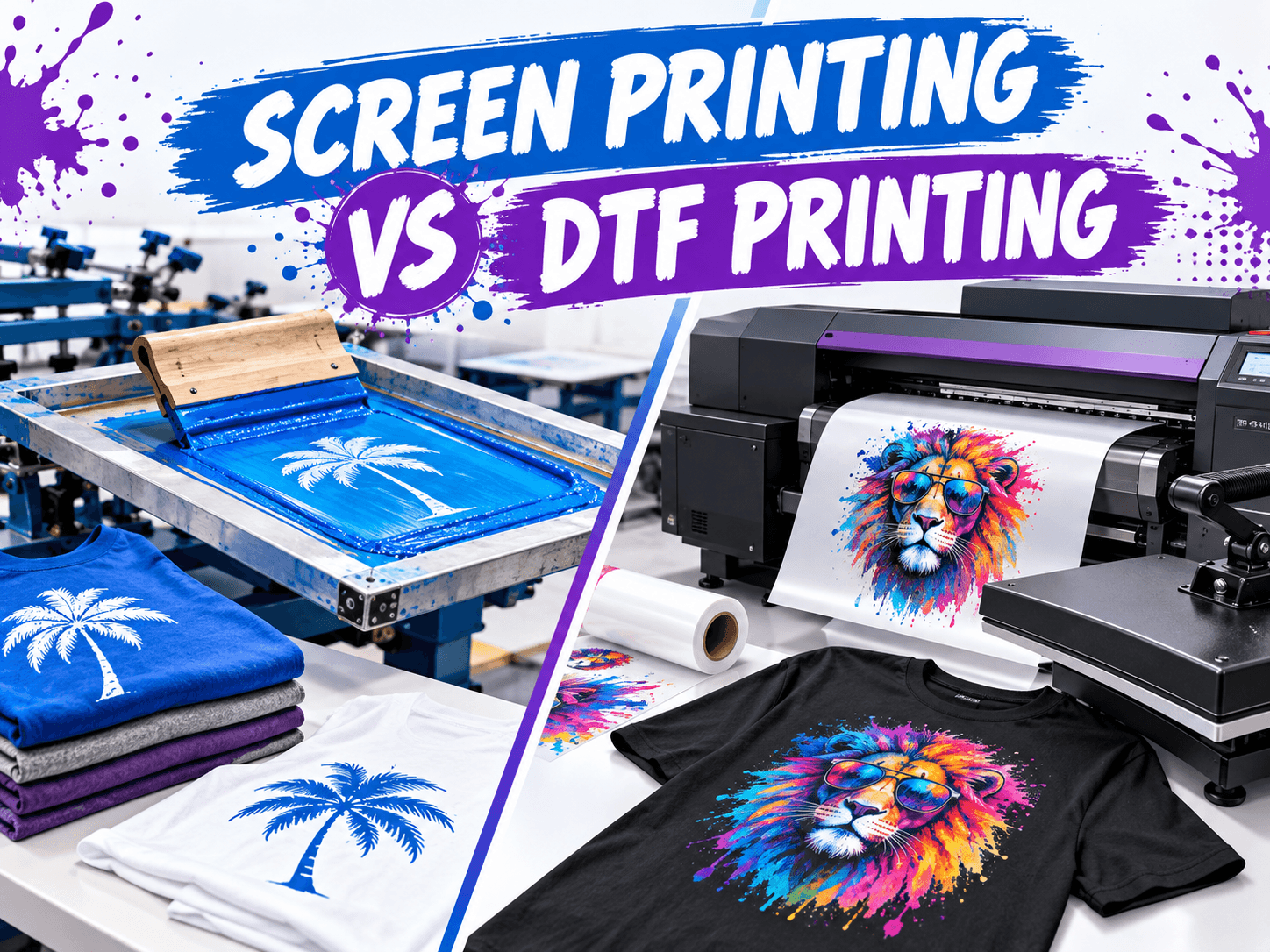
Screen printing pushes ink through a fine mesh stencil (a “screen”) directly onto the garment, one color at a time. Each color in your design needs its own screen, which is why screen printing is most cost-effective for designs with a limited color palette and larger order quantities.
Pros of Screen Printing
- ● Bold, vibrant, opaque color
- ● Excellent for large-volume orders
- ● Very durable ink lay on cotton fabrics
- ● Cost drops significantly as quantity increases
- ● Great for event shirts, team apparel, and giveaways
Cons of Screen Printing
Because each color requires a separate screen, complex, full-color, or photographic designs become expensive and time-consuming to print. Screen printing also isn’t practical for very small orders, since screen setup costs need to be spread across enough pieces to make sense.
What Is DTF Printing?
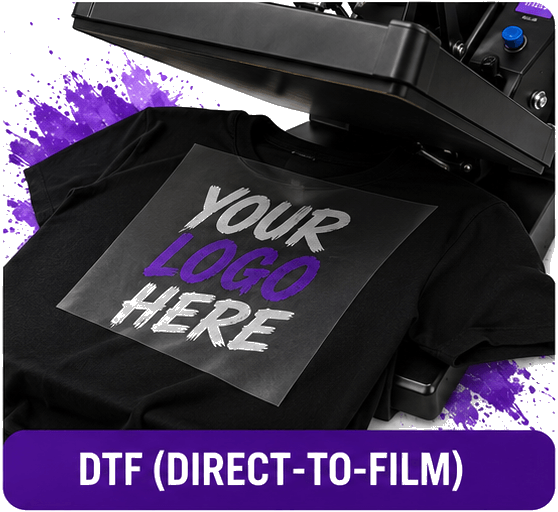
DTF printing prints your full-color design onto a special film using ink, applies an adhesive powder, and then heat-presses the transfer onto the garment. Because there’s no screen setup and no limit on colors, DTF handles detailed, gradient-heavy, and photo-realistic artwork with ease.
Pros of DTF Printing
- ● Unlimited colors in a single print
- ● Handles gradients, shading, and fine detail
- ● Works well on small orders and one-off pieces
- ● Applies to cotton, polyester, and blends
- ● No screens to set up, so turnaround can be faster on small runs
Cons of DTF Printing
DTF transfers sit slightly differently on the fabric than screen printing, and on very large orders, the per-piece cost doesn’t drop as sharply as it does with screen printing. For huge batches of a simple, one- or two-color design, screen printing is often the more economical choice.
Which Fabrics Work Best?
Screen printing performs best on natural fibers like cotton, where ink absorbs cleanly into the weave. DTF printing is more fabric-flexible, adhering well to cotton, polyester, blends, and even some technical or performance fabrics that screen printing can struggle with.
Screen Printing vs. DTF Printing: Side-by-Side
| Factor | Screen Printing | DTF Printing |
|---|---|---|
| Best for | Bold, simple, high-volume designs | Detailed, full-color designs |
| Color limits | Priced per color | Unlimited colors, same price |
| Order size sweet spot | Larger runs | Small to mid-size runs |
| Fabric flexibility | Best on cotton | Works on most fabrics |
| Setup required | Screens per color | No screens needed |
Quick Decision Guide
If your design has one or two solid colors and you’re ordering in bulk, screen printing will usually save you money. If your design is full-color, has gradients, or you’re ordering a smaller batch, DTF printing will give you a cleaner result without the added setup cost.
Final Thoughts
There’s no single winner between screen printing and DTF printing — the best method depends entirely on your artwork and order size. Simple, bold designs printed in bulk favor screen printing, while detailed, colorful, or smaller-batch designs are usually better suited to DTF.