














































What Is DTF Printing?
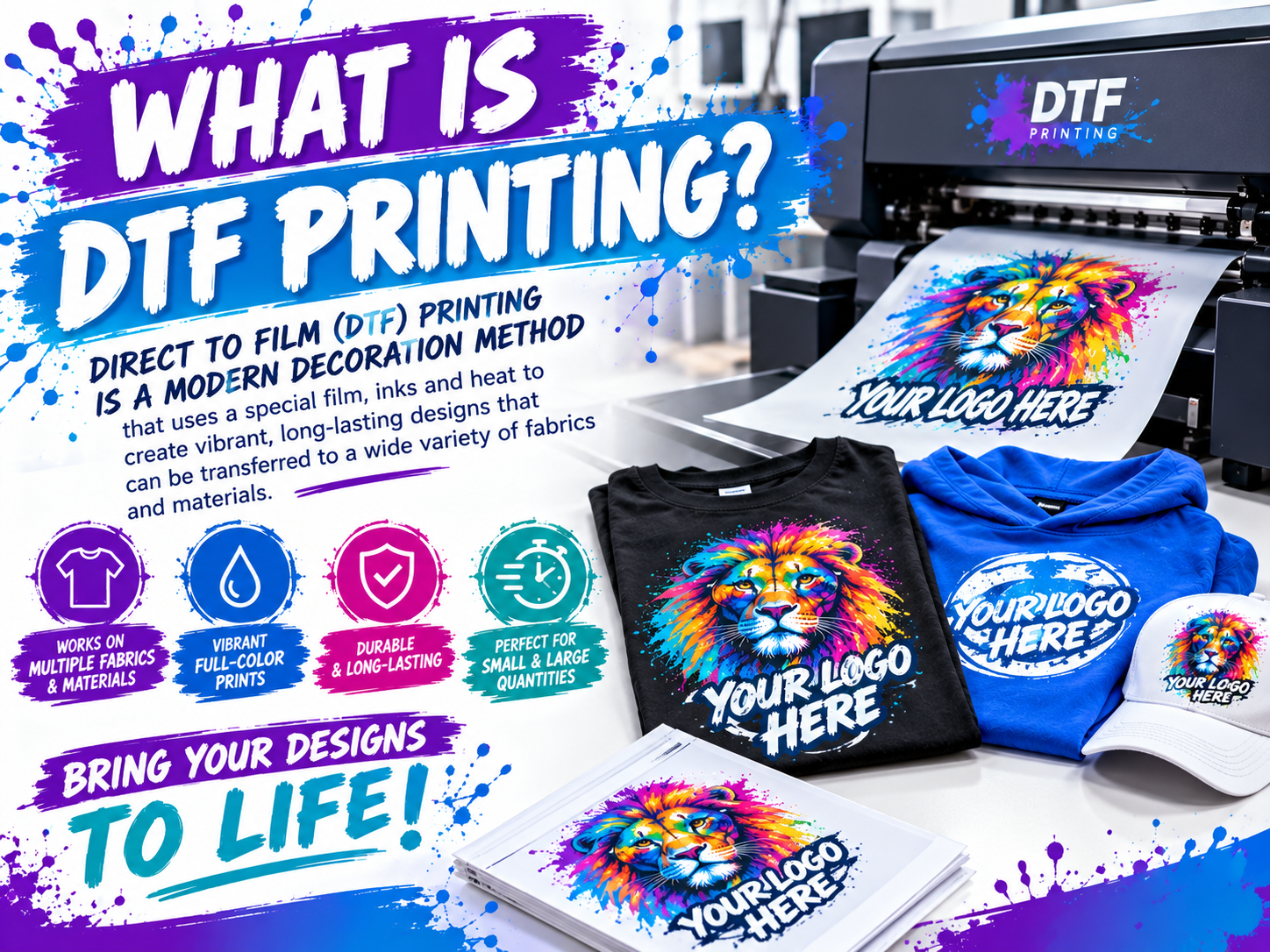
DTF stands for Direct-to-Film, a printing method that has quickly become one of the most popular ways to decorate custom apparel. If you’ve seen full-color, highly detailed designs on T-shirts and hoodies lately, there’s a good chance DTF printing was behind it. Here’s how the process works and why so many businesses are choosing it.
How DTF Printing Works
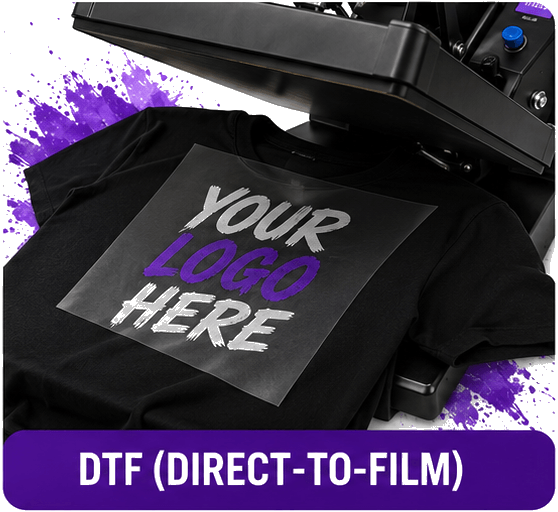
DTF printing involves printing your design onto a special film using specialized ink, rather than printing directly onto the garment. The process happens in a few key stages before the design ever touches the fabric.
The DTF Printing Process, Step by Step
- ● The design is printed onto a clear film using CMYK and white ink
- ● A hot-melt adhesive powder is applied to the wet ink
- ● The film is cured to bond the powder to the design
- ● The film is heat-pressed onto the garment
- ● The film backing is peeled away, leaving the design fused to the fabric
Why the White Ink Layer Matters
Unlike some printing methods, DTF always includes a white ink base layer beneath the colored design. This lets colors stay bright and accurate even on dark garments, since the white layer prevents the fabric color from showing through and dulling the print.
What Makes DTF Custom Printing Different from Other Methods?
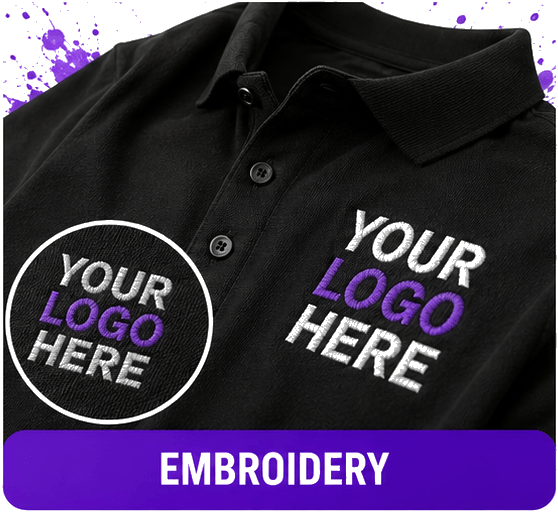
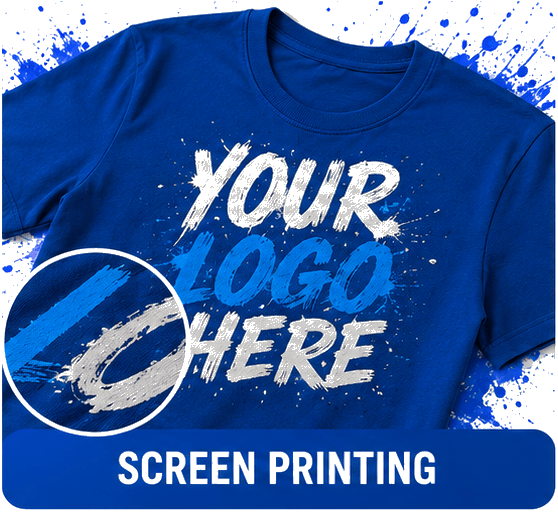
Unlike screen printing, DTF doesn’t require a separate screen for each color, which means full-color, gradient-heavy, and photo-realistic designs cost the same to print as a simple one-color logo. Unlike embroidery, DTF can reproduce fine detail, small text, and smooth shading that thread simply can’t replicate.
Pros of DTF Printing
- ● Unlimited colors in a single design
- ● Works on cotton, polyester, and blended fabrics
- ● No minimum order required
- ● Vibrant color, even on dark garments
- ● Handles gradients, shadows, and fine detail well
What DTF Printing Is Best Used For
DTF printing is an excellent choice for detailed logos, photo-style artwork, multi-color designs, and small to mid-size orders. It’s commonly used for T-shirts, hoodies, tote bags, and custom merchandise where color variety and detail matter more than sheer order volume.
DTF Printing vs. Screen Printing at a Glance
Screen printing is generally more cost-effective for large orders of simple, bold designs, since ink and setup costs are spread across many pieces. DTF printing is more flexible for smaller runs and detailed, colorful artwork since there’s no per-color screen cost to absorb.
Is DTF Service Durable?
When properly applied, DTF transfers bond tightly to the fabric and hold up well over years of normal wear and washing. The flexible film also moves with the fabric, which helps it resist cracking on stretchy or fitted garments.
Quick Takeaway
DTF printing transfers full-color designs onto film and then heat-presses them onto fabric, giving you unlimited colors, fine detail, and flexibility across fabric types — all without a minimum order requirement.